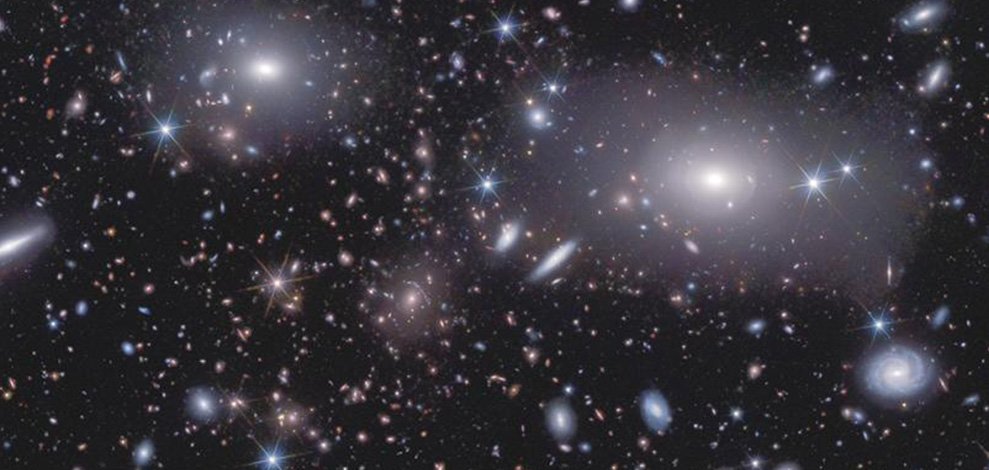
With 900 million galaxies in the images, the new dataset from the Euclid space telescope provides plenty of work for cosmologist Hendrik Hildebrandt—who is involved in analyzing the data.
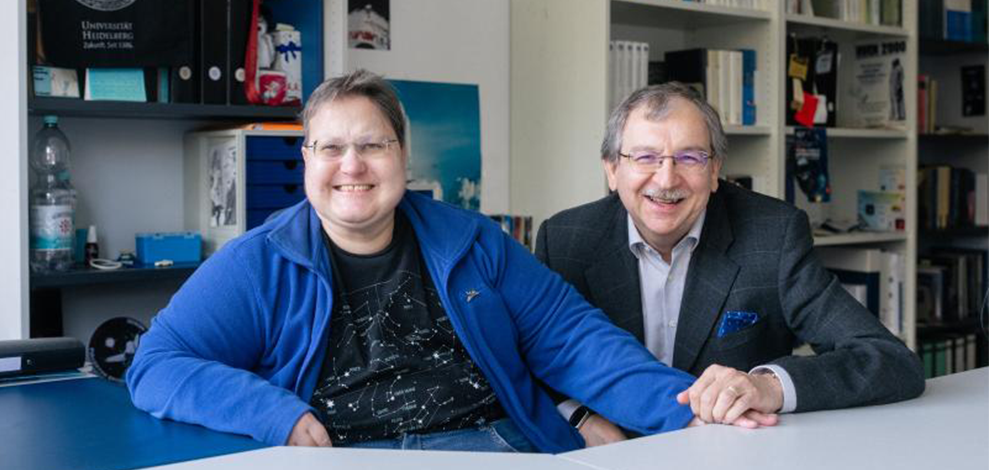
Orbiting, accretion, destruction: Binary stars cannot coexist peacefully in the long run. The astronomer couple Kerstin Weis and Dominik Bomans are investigating the physical processes that lead to the formation of nebulae.
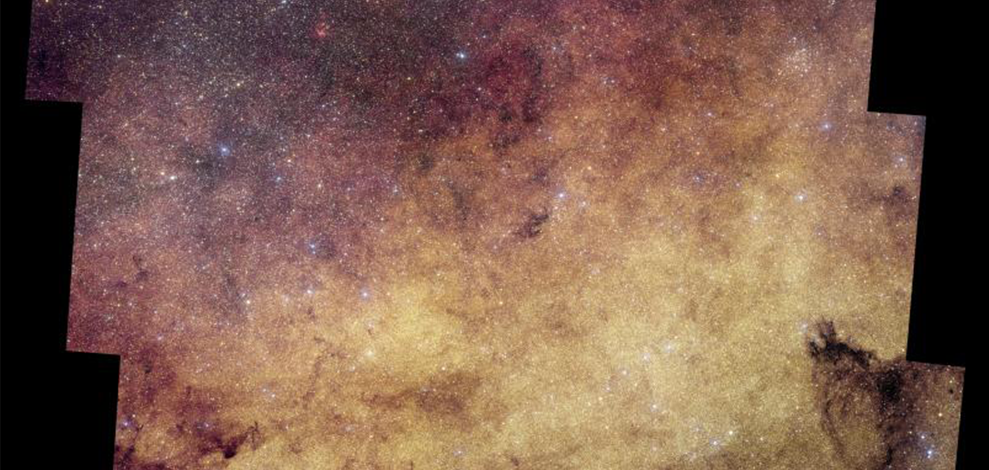
The Euclid space telescope has captured over 60 million stars in our Milky Way in a single image—the largest high-resolution photo ever taken of the center of our Milky Way in visible light.
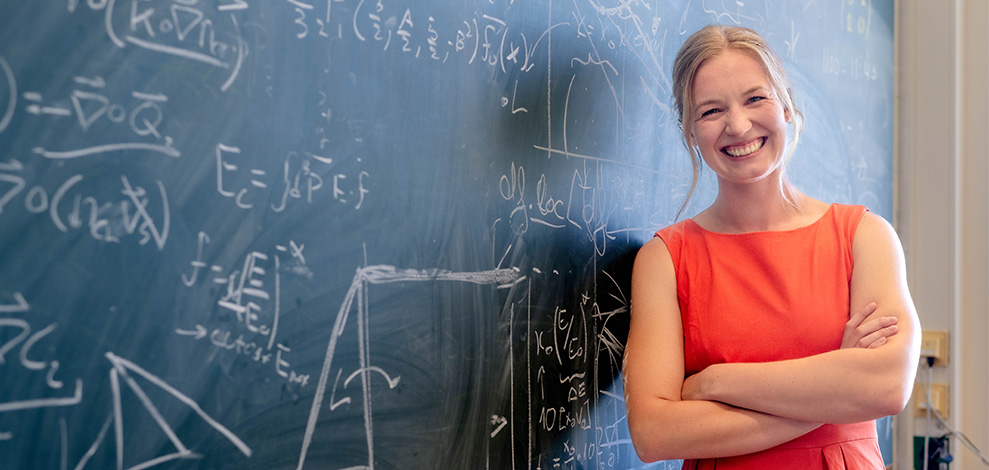
The Department Physics and Astronomy is pleased to announce that the 2025 Dissertation Award, sponsored by the Wilhelm and Else Heraeus Foundation, has been awarded to Dr. Sophie Aerdker. The astrophysicist conducted her research in the group led by Prof. Julia Tjus...
Prof. Dr. Anna Franckowiak and her Indian colleague Prof. Dr. Shabnam Iyyani have been awarded the WISER (Women Involvement in Science & Engineering Research) Collaboration Grant. Together, they are tracking gamma ray bursts.